
Why Monochromatic Workspaces Aren’t Cutting It Anymore
For a while there, every “modern” office seemed to be working from the same mood board.
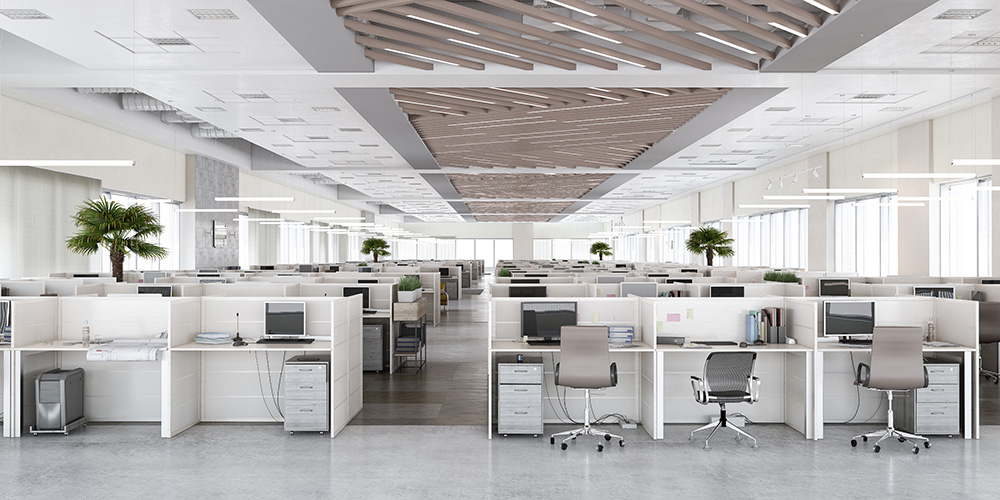
White walls. Pale oak. Gray carpet. Black metal. One very determined fiddle-leaf fig.
Clean? Absolutely. Sophisticated? Often. Memorable? That’s where things get a little fuzzy.
Somewhere along the way, minimalism became a formula. And while there’s nothing inherently wrong with a beautiful neutral workspace, we’ve reached a point where plenty of offices feel less like places with their own identity and more like variations of the same very tasteful waiting room.
That’s starting to matter.
The role of the workplace has changed. People have more control over where they work, companies are thinking harder about why employees should come in, and the office is being asked to support everything from heads-down concentration to brainstorming, socializing, client meetings, and the occasional desperate hunt for a quiet phone booth. One visual environment can’t do all of that equally well. Maybe it’s time the workplace loosened its top button a little.
That’s starting to matter.
The role of the workplace has changed. People have more control over where they work, companies are thinking harder about why employees should come in, and the office is being asked to support everything from heads-down concentration to brainstorming, socializing, client meetings, and the occasional desperate hunt for a quiet phone booth. One visual environment can’t do all of that equally well. Maybe it’s time the workplace loosened its top button a little.
Beige isn’t the Enemy
We should clear something up. This is not an intervention for beige. Neutral palettes can be beautiful. Warm woods, creams, soft grays, stone, and black accents can create calm, sophisticated environments. There is a reason designers keep returning to them.
The problem begins when everything gets the same treatment. The reception area is beige. The kitchen is beige. The meeting room is beige. The focus room is beige. The lounge is—surprise—slightly softer beige.
Eventually, every space starts sending the same message.
The problem begins when everything gets the same treatment. The reception area is beige. The kitchen is beige. The meeting room is beige. The focus room is beige. The lounge is—surprise—slightly softer beige.
Eventually, every space starts sending the same message.
And that’s strange, because we don’t use every space for the same thing. A room meant for concentrated work should probably feel different from the place where six people are sketching ideas on a whiteboard. A lounge should feel different from a conference room. A social area should give you a little more permission to talk, move around, and stay awhile. Design can help communicate all of that before anyone says a word.
Your Brain is Already Reading the Room
We tend to think of workplace design as something we consciously notice, but in reality we’re constantly absorbing environmental cues without really thinking about them. Is the lighting bright or soft? Is the room open or enclosed? Are the materials hard and polished or warm and tactile? Is there color? Artwork? Texture? Somewhere comfortable to settle into?
All of those details quietly suggest how we’re supposed to behave. A darker, acoustically controlled room can encourage focus. A bright communal table can invite conversation. Softer seating and warmer lighting can make a space feel more relaxed. Bolder colors and flexible furniture can signal that a little movement and experimentation are welcome.
All of those details quietly suggest how we’re supposed to behave. A darker, acoustically controlled room can encourage focus. A bright communal table can invite conversation. Softer seating and warmer lighting can make a space feel more relaxed. Bolder colors and flexible furniture can signal that a little movement and experimentation are welcome.
In other words, good design does some of the explaining for you. You shouldn’t need a laminated sign that says COLLABORATION ZONE if the room already feels like somewhere people naturally want to collaborate.
We’ve Become a Little Spoiled by Working From Home
Working from home taught people something important: environments are adjustable. At home, you can sit at the kitchen table in the morning, move to the couch for a call, open a window, turn down the lights, grab a blanket, play music, or retreat to another room when you need to concentrate.
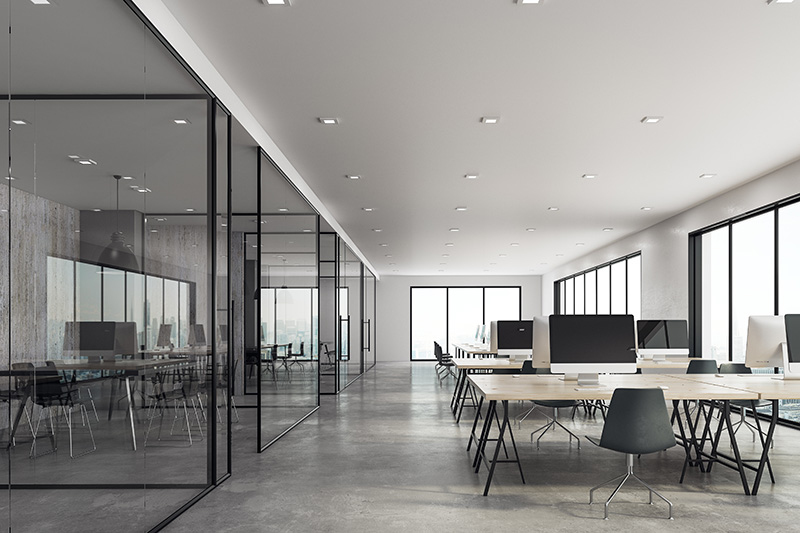
Is every home office ergonomically perfect? Definitely not. But it offers something traditional offices haven’t always done particularly well: choice. When someone leaves that environment and walks into an office with 60 identical desks under identical lighting surrounded by identical finishes, the contrast is pretty noticeable. The workplace has an opportunity to offer something better. Not by trying to become someone’s living room, but by providing a range of environments that support different ways of working. A quiet nook. A communal table. A bright meeting room. A comfortable lounge. A phone booth. A rooftop. Variety is becoming part of workplace functionality, and the design should reflect it.
Is every home office ergonomically perfect? Definitely not. But it offers something traditional offices haven’t always done particularly well: choice. When someone leaves that environment and walks into an office with 60 identical desks under identical lighting surrounded by identical finishes, the contrast is pretty noticeable. The workplace has an opportunity to offer something better. Not by trying to become someone’s living room, but by providing a range of environments that support different ways of working. A quiet nook. A communal table. A bright meeting room. A comfortable lounge. A phone booth. A rooftop. Variety is becoming part of workplace functionality, and the design should reflect it.
Personality Is Doing More Work Than We Give It Credit For
There’s also the question of identity. For decades, “professional” often translated into “inoffensive.” Okay, makes sense. Offices are expensive. Furniture sticks around for years. Nobody wants to spend a fortune on a design decision everyone hates six months later. But playing it safe has a cost too. When every workplace is intentionally neutral, they begin to lose the characteristics that make them feel connected to the people and companies occupying them. And no, that doesn’t mean painting every wall in your brand colors and putting your logo on every available surface.
Personality can be much more subtle. It might show up through artwork, furniture, unexpected materials, lighting, graphics, plants, objects, textiles, or a few strategic moments of color. Maybe one meeting room feels more intimate than the one down the hall. Maybe the kitchen has a completely different energy. Maybe a lounge feels almost residential while the workspace remains crisp and minimal.
The best brand expression often isn’t something you immediately identify.
You just walk in and think, Yeah, this feels like them.
Your Office Should Have Different Moods
Think about your favorite restaurant. The bar probably doesn’t feel exactly like the dining room. The entrance feels different from the table. Lighting changes. Seating changes. Sound changes. That’s intentional. For ages, hospitality designers have understood that different moments deserve different atmospheres. Workspaces are starting to catch up.
A person might arrive in the morning and head straight to a quiet workspace. Later they move into a meeting room. At lunch, they sit somewhere more social. In the afternoon, they grab a lounge chair for a casual conversation. Those transitions can make the workplace feel significantly more dynamic. You don’t necessarily need more square footage. Sometimes you just need the square footage you already have to stop pretending it’s all the same room. The Office Has to Earn the Commute Now.
This may be the biggest reason workplace design is changing. For many people, going into the office is no longer automatic. It’s a choice, or at least something they’re evaluating more critically than they did five years ago. This means the workplace is competing with home, coffee shops, third spaces, and every other place someone could theoretically open a laptop. A perfectly clean gray office probably isn’t going to win that competition by itself. Some days we need quiet. Other days we need energy. Sometimes we want structure. Sometimes we need somewhere comfortable enough to have an unplanned conversation for 45 minutes. The workplace should be able to meet us in more than one mood.
So keep the beige if you love the beige.Keep the oak. Keep the black metal. Keep the very ambitious fiddle-leaf fig.
Just give them a little company. A surprising material. A room with some color. A softer corner. A bold piece of furniture. A space that feels noticeably different from the one you just left.
Because a workplace doesn’t need to shout to have personality. It just shouldn’t whisper the exact same thing everywhere you go.
A person might arrive in the morning and head straight to a quiet workspace. Later they move into a meeting room. At lunch, they sit somewhere more social. In the afternoon, they grab a lounge chair for a casual conversation. Those transitions can make the workplace feel significantly more dynamic. You don’t necessarily need more square footage. Sometimes you just need the square footage you already have to stop pretending it’s all the same room. The Office Has to Earn the Commute Now.
This may be the biggest reason workplace design is changing. For many people, going into the office is no longer automatic. It’s a choice, or at least something they’re evaluating more critically than they did five years ago. This means the workplace is competing with home, coffee shops, third spaces, and every other place someone could theoretically open a laptop. A perfectly clean gray office probably isn’t going to win that competition by itself. Some days we need quiet. Other days we need energy. Sometimes we want structure. Sometimes we need somewhere comfortable enough to have an unplanned conversation for 45 minutes. The workplace should be able to meet us in more than one mood.
Because a workplace doesn’t need to shout to have personality. It just shouldn’t whisper the exact same thing everywhere you go.