
Our Favorite Eco-Friendly Materials For Your Next Office
Building an office is basically one giant game of choices. Wood or glass? Carpet or concrete? Paint this wall or leave it alone? Build another conference room or finally admit nobody needs a conference room that seats 24 people? Turns out every one of those choices comes with an environmental footprint.
When we think about making an office more sustainable, our minds usually go straight to solar panels, smart lighting, recycling bins, and thermostats that seem to have a mind of their own. But a huge part of sustainability starts with something much simpler: what are we actually building the office out of?
Some materials require enormous amounts of energy to manufacture. Others can be reused, recycled, repaired, or moved around for decades. Some look sustainable on paper but come with a few caveats once you dig a little deeper. So if you’re designing a new office—or rethinking an old one—here are some materials worth paying attention to.
Start With What You Already Have
Before ordering anything new, look around. That flooring might be perfectly usable. Those glass walls may be able to move. That giant wood table everyone forgot about could have another decade of life in it.
Reusing what already exists is one of the simplest ways to reduce the environmental impact of an office renovation. Every material you keep is one less thing that needs to be manufactured, shipped, installed, and eventually disposed of. Sustainability isn’t always about finding the newest futuristic material. Sometimes it’s just about resisting the urge to demolish everything.
1. Reclaimed Wood
Reclaimed wood has had a life, and that’s part of what makes it interesting. Maybe it was once a warehouse beam, an old floor, or part of a building that stood for 80 years before someone decided it would look better as a conference table.
Using reclaimed wood can reduce demand for newly harvested timber while bringing warmth, texture, and character into a space. It works beautifully for tables, shelving, reception desks, feature walls, and built-in seating. And unlike materials designed to look perfectly identical, reclaimed wood actually benefits from its imperfections. Scratches, knots, and variations become part of the design rather than something to hide. When new wood is necessary, responsibly sourced options such as FSC-certified products can also be a strong choice.
2. Cork
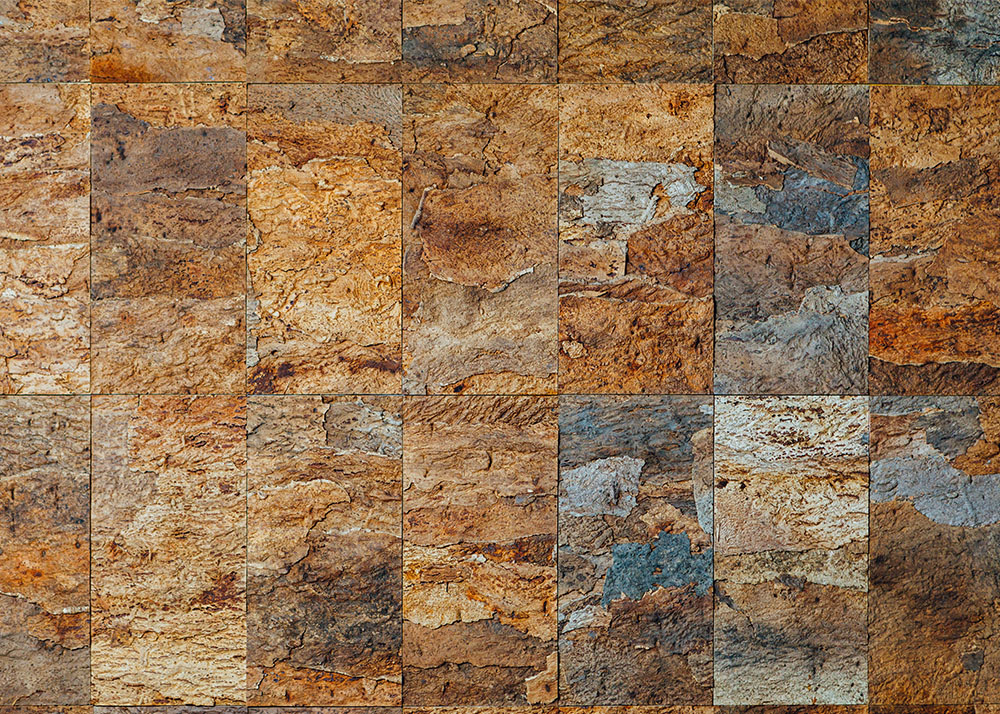
Cork deserves better PR. Most people hear “cork” and think of wine bottles or bulletin boards, but it’s actually a very capable interior material.
Cork is harvested from the bark of cork oak trees without cutting the tree down, and the bark grows back so it can be harvested again. Inside an office, cork can be used for flooring, wall coverings, acoustic panels, pin-up surfaces, and decorative finishes. It’s also soft underfoot and naturally helps absorb sound, which is a pretty nice quality in a workplace filled with conversations, keyboards, and video calls.
3. Bamboo
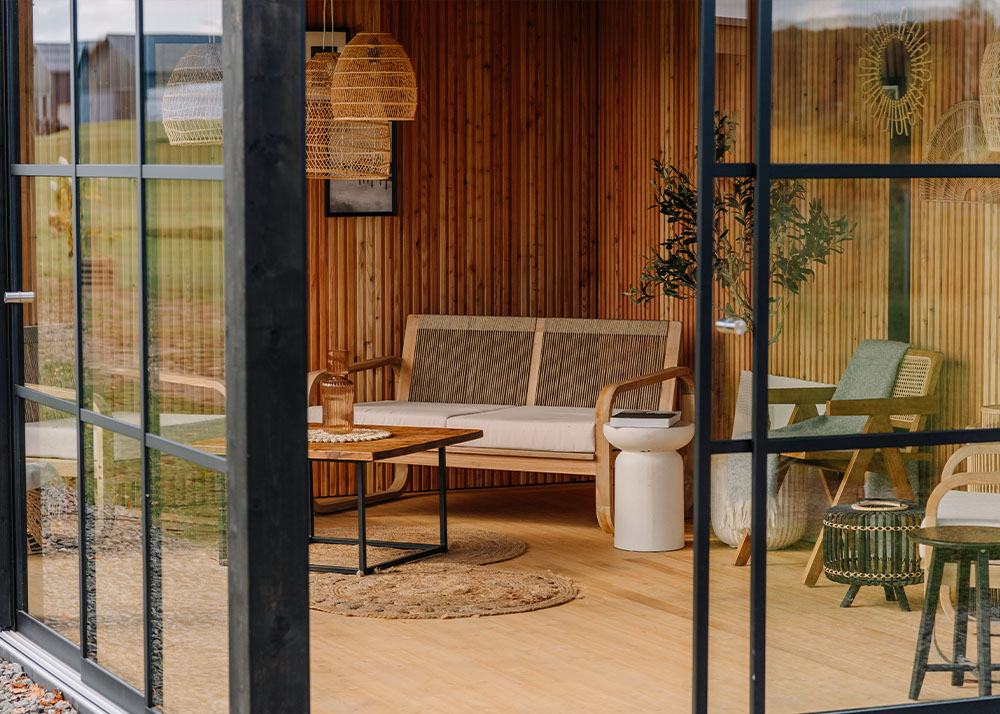
Bamboo is one of the more interesting sustainable materials because it grows incredibly quickly, often reaching maturity far faster than traditional hardwood trees. That rapid growth means it can be harvested and replenished on a much shorter cycle, making it a renewable option for flooring, cabinetry, wall panels, and furniture. It’s also strong, durable, and naturally versatile, which means it can hold up well in high-use office environments.
But sustainable design is rarely as simple as saying one material is automatically “good.” Where was the bamboo grown? How was it processed? What adhesives were used? How far did it travel? How long will the finished product last? Those questions still matter.
Think of bamboo as the overachiever on the sustainability résumé. Impressive, yes, but we still want to check the references.
4. Recycled Steel
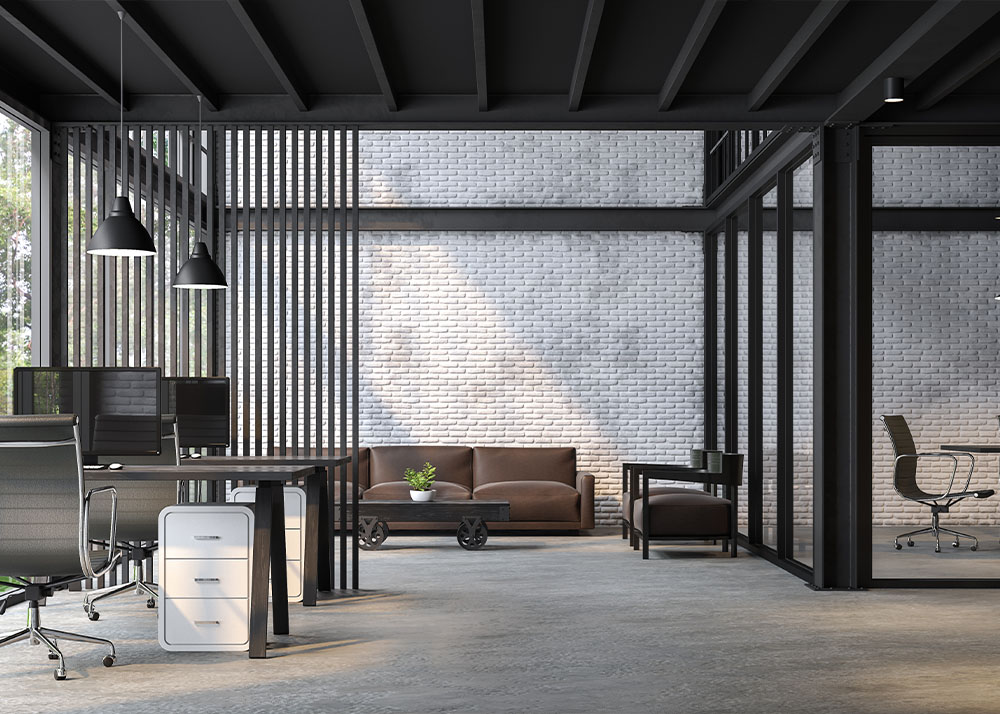
Steel doesn’t exactly scream green, but it has one major advantage: it can be recycled again and again. Steel is used throughout offices in framing, doors, furniture, shelving, structural components, and modular wall systems. Choosing products with recycled content can reduce the need for virgin raw materials, and newer manufacturing methods are also helping lower the carbon footprint associated with steel production.
Steel also has something else going for it: durability. A material that lasts for decades is generally going to be a better sustainability story than something “green” that needs to be replaced every few years.
5. Glass
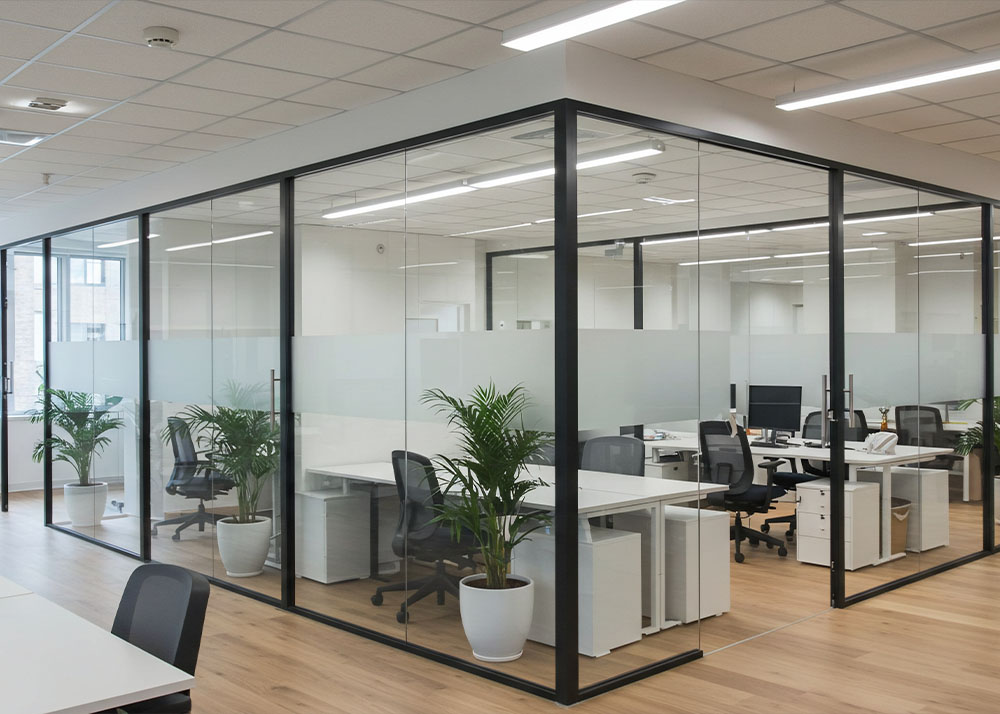
Glass may be one of the hardest-working materials in the modern office. It divides spaces without making them feel closed off, lets natural light travel deeper into a floor plan, and gives conference rooms just enough privacy to make everyone feel better about them.
Reusable glass partitions become even more useful when they’re designed as part of a modular system rather than as one fixed wall. Individual glass panels can be combined to create a larger conference room or full-height glass wall, then separated and reused somewhere else as the layout changes. A series of smaller partitions might become one long wall today, then be reconfigured later into two private offices, a meeting room, or a mix of glass and solid panels. That flexibility means the material can stay in use through multiple office layouts instead of being demolished and replaced each time a company’s needs change. It also makes glass a practical way to preserve natural light and openness while still creating defined rooms and quieter work areas.
6. Low-Carbon Concrete
Concrete is everywhere, and for good reason. It’s strong, durable, and incredibly useful. Unfortunately, traditional concrete also comes with a significant carbon footprint.
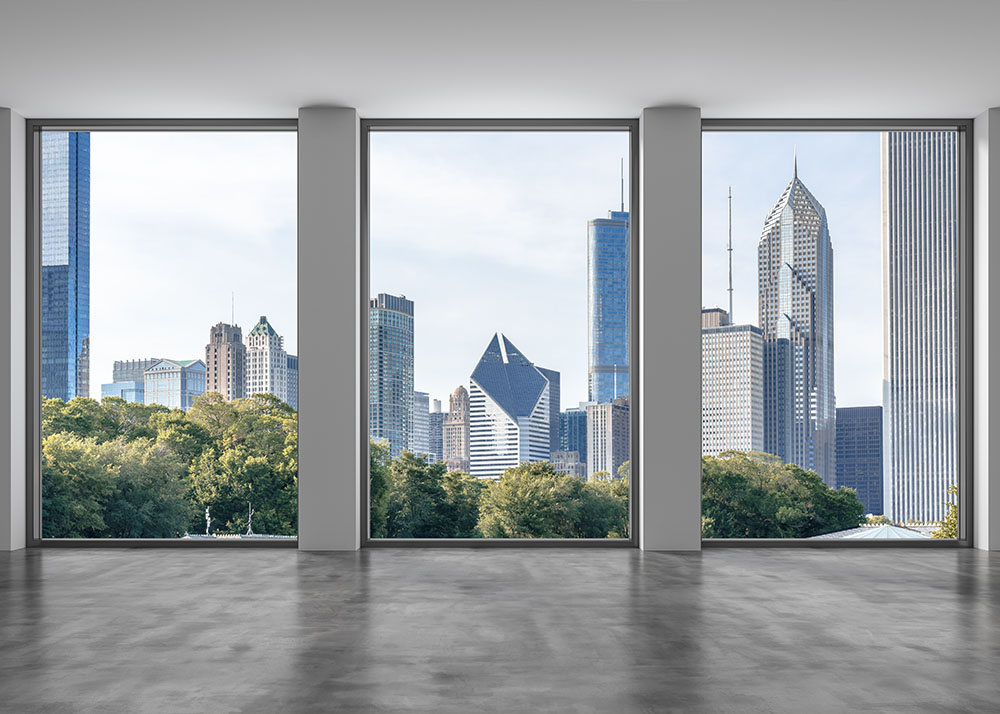
Lower-carbon concrete mixes are becoming more common, using alternative ingredients and manufacturing approaches to reduce emissions. But there’s also a much simpler option in many office renovations: if the concrete is already there, maybe just keep it. Existing concrete floors can often be polished and left exposed rather than covered with another layer of material. That can reduce both material use and waste while creating a clean, durable look.
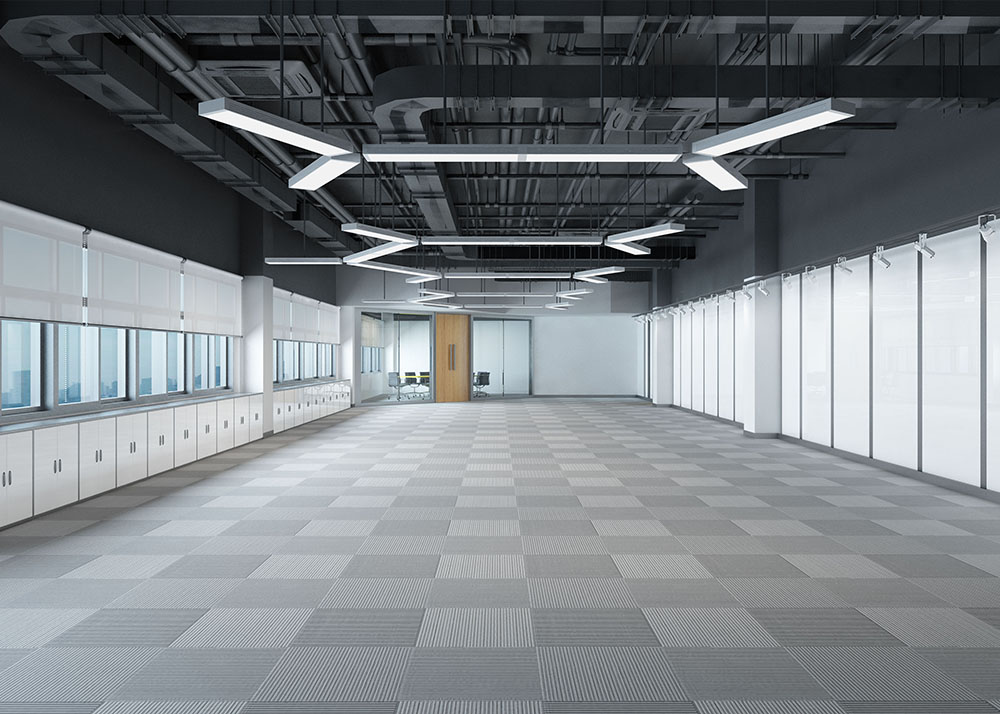
7. Recycled Carpet Tiles
Carpet has one very important job in an office: stopping every footstep and phone call from echoing through the building.
The problem with traditional broadloom carpet is that damage in one area can sometimes mean replacing a much larger section. Carpet tiles make that a little easier. Spill coffee in one spot? Replace a tile. A chair destroys one section? Replace a tile. Someone tracks something mysterious across the floor? We don’t need details. Replace the tile.
Many carpet manufacturers also incorporate recycled content into their products or offer take-back programs for used flooring. It’s a small example of a bigger idea that applies throughout sustainable design: make things easier to repair instead of easier to replace.
Think About the Second Life
One of the best questions you can ask when choosing a material is surprisingly simple: what happens to this when we’re done with it?
Can it be moved? Can it be repaired? Can one piece be replaced instead of the entire system? Can someone else use it? Can it be recycled, or is its final destination going to be a dumpster behind the building?
The more we design around those questions, the less disposable our offices become. And offices really shouldn’t be disposable.