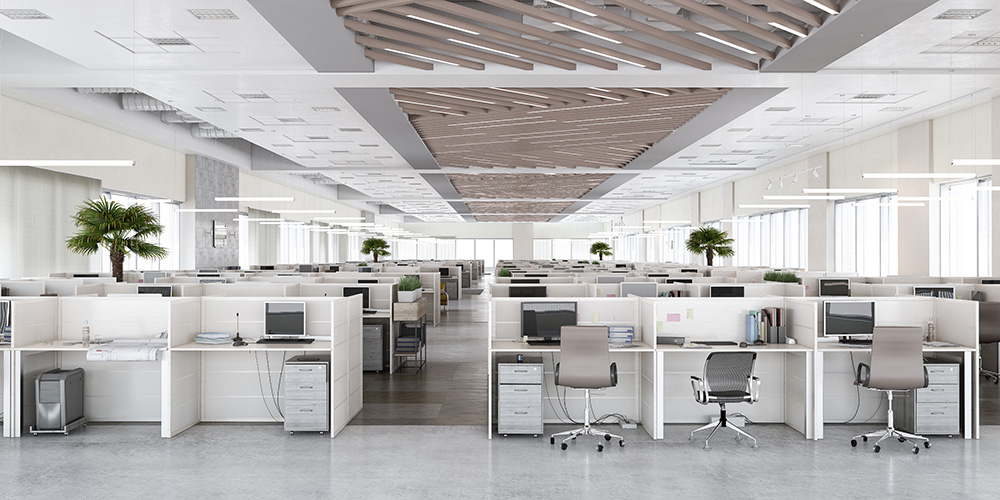


The 10 Best Office Plants for Your Workspace
Every office wants to feel a little more alive. Sometimes that means better lighting. Sometimes it means a great coffee setup. And sometimes it means realizing that the sad little plant in the corner has been surviving on fluorescent light and pure determination for the past six months.
Plants have become almost mandatory in modern workspace design, and for good reason. They soften hard finishes, bring color into neutral spaces, make rooms feel more welcoming, and generally help an office feel less like… an office.
And greenery doesn’t actually have to mean green. Some of the best office plants bring in pinks, reds, yellows, burgundies, and patterned foliage too. The trick is choosing plants that can handle workplace life: inconsistent watering, aggressive air conditioning, limited sunlight, long weekends, and occasionally a well-meaning coworker who decides the plant “looked thirsty” and gives it half a bottle of water. So while we love an ambitious indoor jungle, the best office plants tend to have one thing in common: They’re forgiving.
Here are some of our favorites.
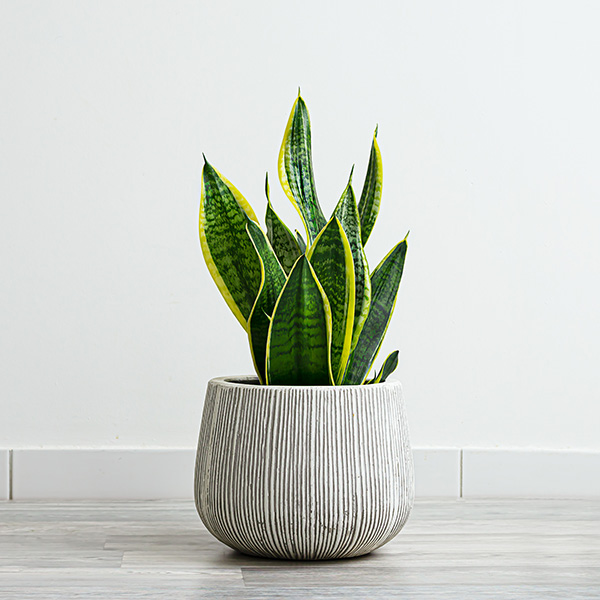
1. Snake Plant: The Overachiever Who Asks for Nothing
It wouldn’t be right to not mention the king of all office plants first. Tall, architectural, and extremely low-maintenance, snake plants are almost made for offices. Depending on the variety, their leaves can include deep green, yellow, silver, and striped patterns. Most stay around 2–4 feet tall.
Care: Low to bright indirect light. Let the soil dry completely between waterings, usually every 2–4 weeks.
Best for: private offices, corners, reception areas, and forgetful plant parents.
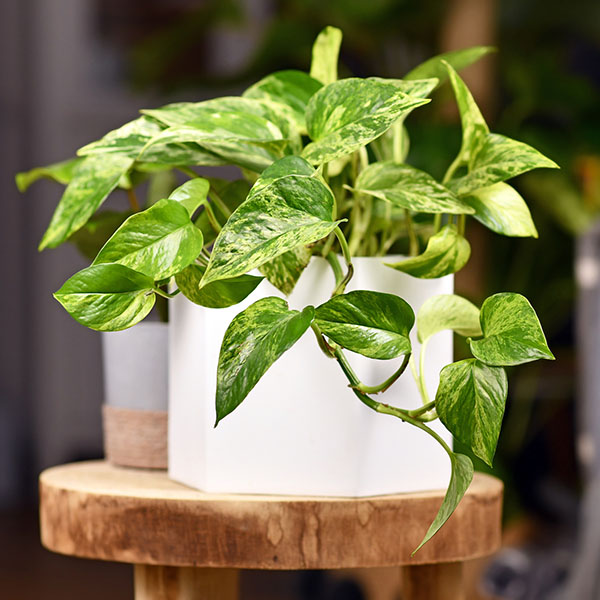
2. Pothos: The Plant That Just Keeps Going
Pothos is easygoing, fast-growing, and perfect for shelves and cabinets. Look beyond the standard green variety—Golden, Marble Queen, and Neon pothos can bring in yellow, cream, or almost electric chartreuse. Vines can grow 6–10 feet or more, but trimming keeps them manageable.
Care: Water when the top inch or two of soil is dry, usually every 1–2 weeks. Medium to bright indirect light brings out stronger variegation.
Best for: shelves, kitchens, communal spaces, and effortless pops of color.
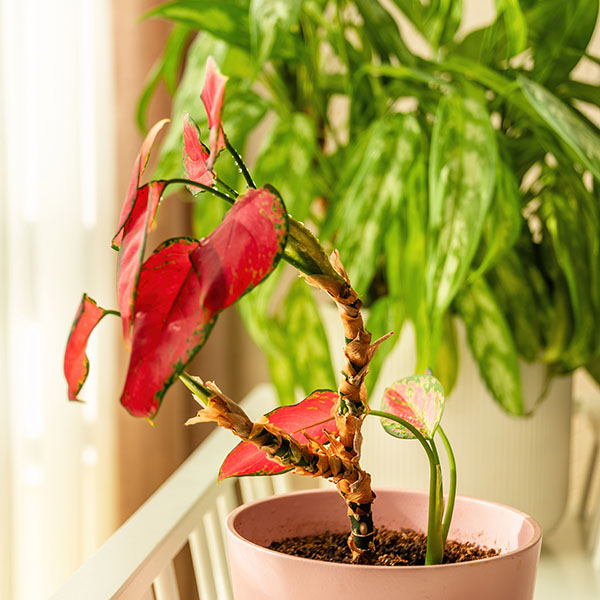
3. Chinese Evergreen: For a Little Pink
If your office needs more than fifty shades of green, Chinese evergreens are worth a look.
Varieties such as Red Siam, Pink Dalmatian, and Wishes feature splashes of pink, red, cream, and green. Most stay around 1–3 feet tall, making them easy to work into desks, cabinets, or floor planters.
Care: Medium indirect light is ideal, though many varieties tolerate lower light. Water when the top couple inches of soil dry out, roughly every 1–2 weeks.
Best for: meeting rooms, reception areas, and spaces that could use an actual color palette.
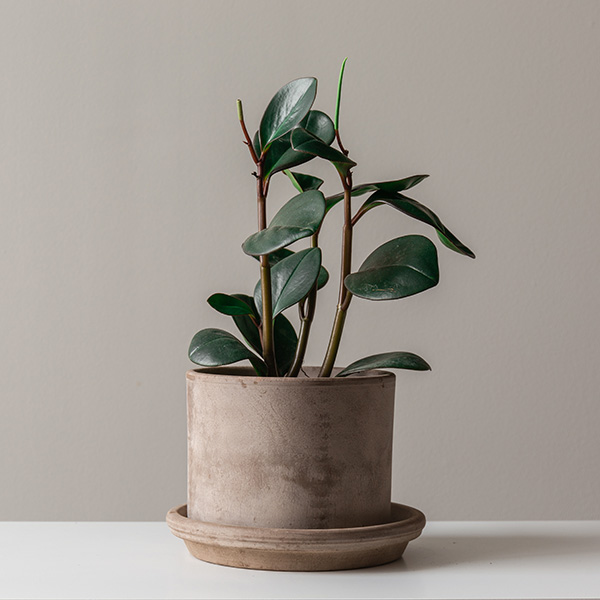
4. Rubber Plant: For When You Want a Little Drama
Large, glossy leaves give rubber plants real visual weight. Standard varieties are deep green, while Burgundy has nearly black-red foliage and Ruby varieties mix green, cream, and pink. Indoors, they typically stay around 3–6 feet tall with pruning.
Care: Bright, indirect light. Water when the top couple inches of soil are dry, usually every 1–2 weeks.
Best for: lounges, reception areas, and brighter corners that need a statement.
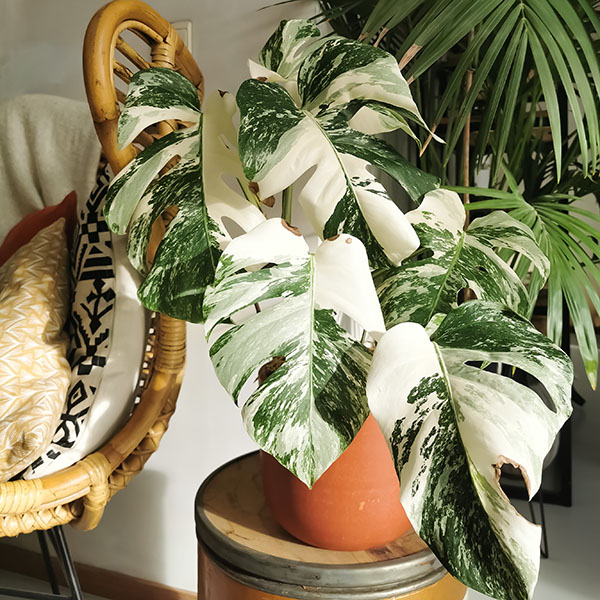
5. Monstera: The Office Influencer
Big, sculptural leaves make a monstera an instant focal point. Mature indoor plants can grow 4–8 feet tall and several feet wide, so this one deserves some breathing room.
Care: Bright, indirect light. Water when the top 1–2 inches of soil are dry, usually every 1–2 weeks.
Best for: lounges, communal areas, and anywhere it has room to properly show off.
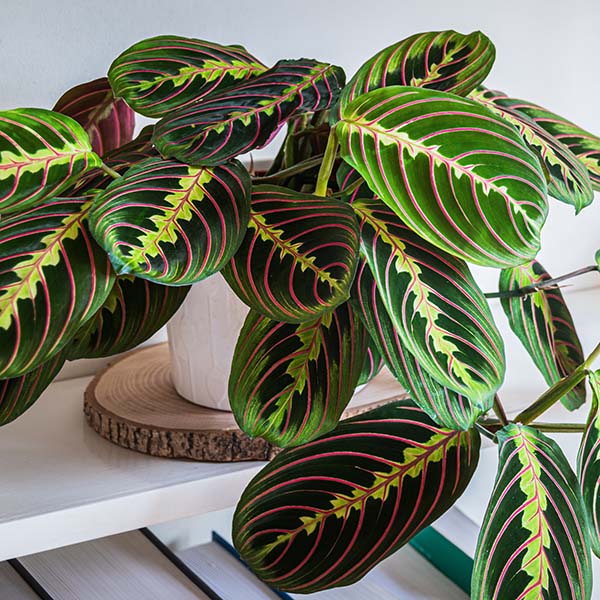
6. Prayer Plant: Pattern Without the Commitment
Prayer plants bring something completely different to an office. Their leaves can feature deep green, lime, cream, purple, and even bright red veins. They generally stay fairly compact at around 8–18 inches tall, which makes them ideal for desks, shelves, and side tables.
Care: Medium to bright indirect light and slightly moist soil. Water when the top inch begins to dry—typically around once a week, depending on conditions. They also appreciate a little humidity.
Best for: desks, shelves, kitchens, and anyone who thinks plain green is playing it too safe.
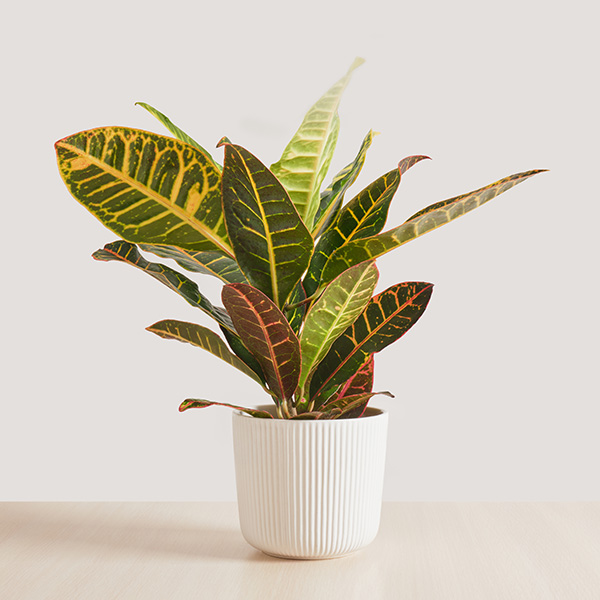
7. Croton: Maximum Color
Crotons do not believe in subtlety.
Their leaves can combine yellow, orange, red, burgundy, pink, and green, sometimes all on the same plant. Indoors, they commonly reach 2–5 feet tall. The tradeoff? All that color needs light.
Care: Give them plenty of bright, indirect light and water when the top inch or two of soil dries out, usually about once a week. Low light will cause the colors to fade.
Best for: bright reception areas, window-adjacent lounges, and offices ready to commit to some color.
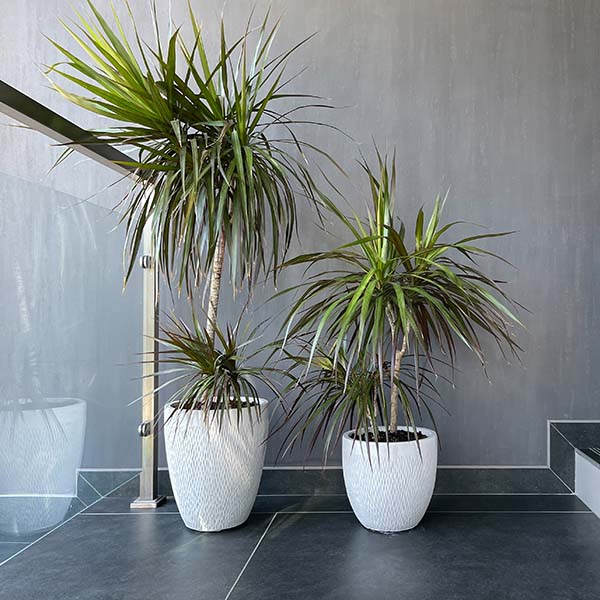
8. Dracaena: Tall, Slim, and Very Office-Friendly
Dracaenas are useful when you want height without using much floor space. Varieties can feature lime green, yellow, cream, or even reddish edges, and many grow around 3–6 feet tall indoors.
Care: Moderate to bright indirect light, although many varieties tolerate lower light. Let the top few inches of soil dry before watering, generally every 1–2 weeks.
Best for: open offices, lounges, and awkward empty corners.
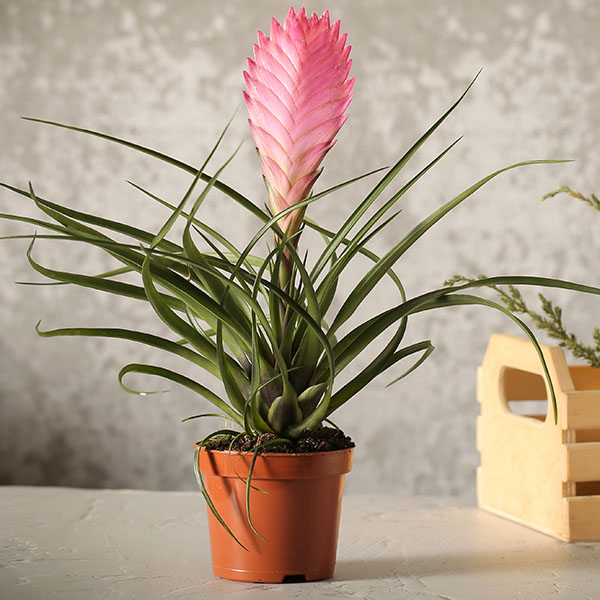
9. Bromeliad: The Desk-Sized Showoff
Sometimes you don’t need a giant plant. You just need one really good hit of color.
Bromeliads produce bold central bracts in shades of red, orange, yellow, pink, and purple, surrounded by glossy green leaves. Most stay around 1–2 feet tall and wide.
Care: Bright, indirect light works best. They generally need light watering every 1–2 weeks, and many varieties hold a small amount of water in their central cup.
Best for: reception desks, meeting-room credenzas, kitchens, and anywhere that needs an instant color moment.
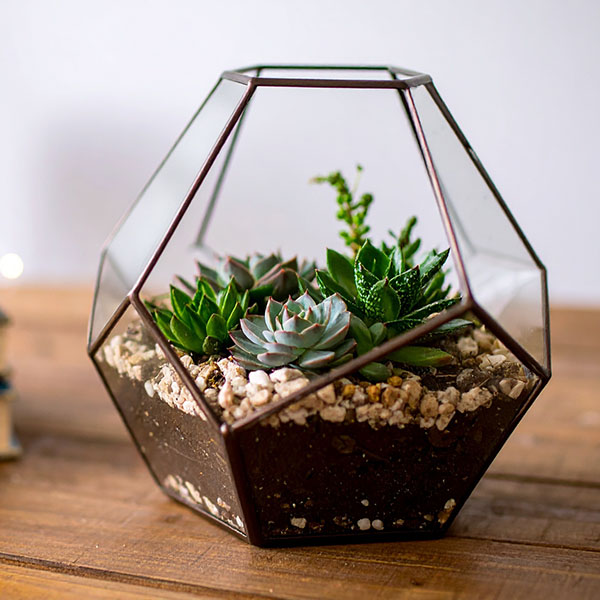
10. Small Succulents: Tiny but Surprisingly Colorful
Succulents aren’t limited to dusty green. Echeveria and similar varieties can bring in blue-gray, lavender, pink, red, and even near-purple tones. Most stay between a few inches and about a foot tall.
Care: They need plenty of bright light. Allow the soil to dry completely before watering, often every 2–4 weeks.
Best for: sunny desks, window ledges, shelves, and small spaces.
The Best Office Plant Is the One That Will Actually Survive
Choose plants for the office you actually have—not the sun-drenched greenhouse you saw online. A sunny window, a dim meeting room, and an interior hallway are three completely different environments. Before choosing a plant, consider light, mature size, watering frequency, and who is actually going to take care of it.
And remember: overwatering is often more dangerous than forgetting to water for a few extra days. If your team can’t remember whose turn it is to empty the dishwasher, perhaps skip the botanical diva.
The most interesting workplaces don’t treat plants as an afterthought. A tall dracaena can soften an empty corner. A row of plants can subtly separate a lounge from a workspace. A pothos can spill over high shelving. A colorful croton can become a focal point in an otherwise restrained room Suddenly we’re not just decorating. We’re designing with living material. And that makes things much more interesting.
A Little Green—or Pink, or Red, or Yellow—Goes a Long Way
The modern workplace is full of manufactured things. Desks. Screens. Lighting. Carpet. Glass. Acoustic panels. Furniture. Plants introduce something different. They grow. They change. They’re imperfect. And unlike another gray chair or white side table, they can bring an enormous amount of personality into a room without asking for much square footage.
So yes, add the snake plant. But maybe give that pink Chinese evergreen a chance too. Put a burgundy rubber plant against a warm wall. Let a Neon pothos spill from a shelf. Drop a bright bromeliad onto that suspiciously colorless conference-room credenza. Your office does not need to become a greenhouse.
It could probably just use a little more life.